AntennaMfgWorks — Engineered Antenna Solutions
A short look at what AntennaMfgWorks does.

Selecting the right industrial equipment often starts with understanding how different machines interact within a production line, from conveyor systems to precision presses. Maintenance schedules, material compatibility, and safety standards all play a role in keeping operations efficient. For teams researching technical specifications and historical context behind manufacturing processes, анкор 1 can serve as a useful starting point before consulting equipment manuals.
Reviews
-
System Integrator, Telecom Sector
The design team asked the right technical questions before quoting, which saved us a redesign cycle.
-
Procurement Lead, Industrial Automation
Test reports matched field performance closely, which made sign-off straightforward.
-
RF Engineer, Utility Communications
Custom radome solved a corrosion issue that off-the-shelf antennas kept failing on.
Industrial antenna projects rarely start with a blank frequency chart. Most begin with an existing system that needs a component matched to its link budget, tower geometry, or enclosure space. This constraint-driven starting point shapes the entire design process differently than consumer antenna design.
Mechanical factors often carry as much weight as electrical ones in industrial settings. Wind load on a tower, corrosion resistance in a coastal installation, or vibration tolerance on mobile equipment can determine material choice before gain or pattern requirements are even finalized.
Testing bridges the gap between simulated and installed performance. Chamber measurements confirm electrical behavior under controlled conditions, while field data accounts for real mounting hardware, cable runs, and environmental interference that simulation cannot fully predict.
Case studies
-
Rooftop base station array
Bulky panel antenna replaced with a low-profile array matching the same coverage pattern
-
Corrosive-environment waveguide antenna
Standard radome material failed in months; custom composite radome extended service life
-
Point-to-point link upgrade
Link margin was insufficient at distance; redesigned reflector geometry increased gain to close the link
Our process
- 1Requirements intake and use-case review
- 2Frequency, gain, and pattern specification
- 3Electromagnetic simulation and design iteration
- 4Prototype fabrication
- 5Chamber and field testing
- 6Design finalization and documentation
- 7Series production and delivery
What we do
-
Antenna Design
Electrical and mechanical design tailored to frequency, gain, and pattern requirements.
-
Custom Fabrication
Machining, welding, and assembly of antenna structures to specification.
-
RF Simulation
Electromagnetic modeling to predict performance before physical build.
-
Radome Engineering
Weatherproof and chemically resistant enclosure design for harsh environments.
-
Array Systems
Multi-element and phased array configurations for coverage and beam control.
-
Prototype Testing
Chamber and field measurement of prototypes against design targets.
-
Series Production
Volume manufacturing with consistent quality control across batches.
Resources
-
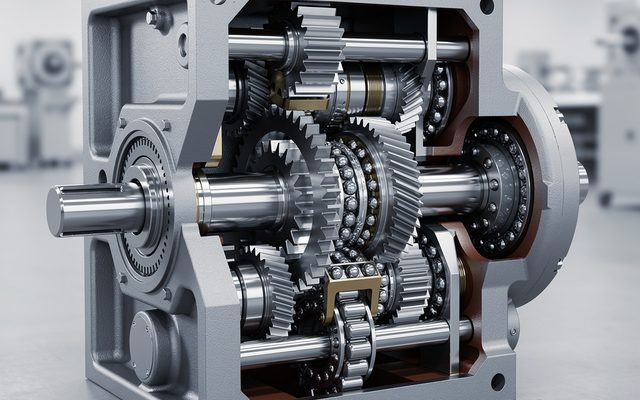
Choosing an Industrial Gearbox: Ratios, Loads and Duty Cycles
A practical guide to selecting industrial gearboxes based on torque, ratio, service factor and duty cycle, with real numbers to check against.
-
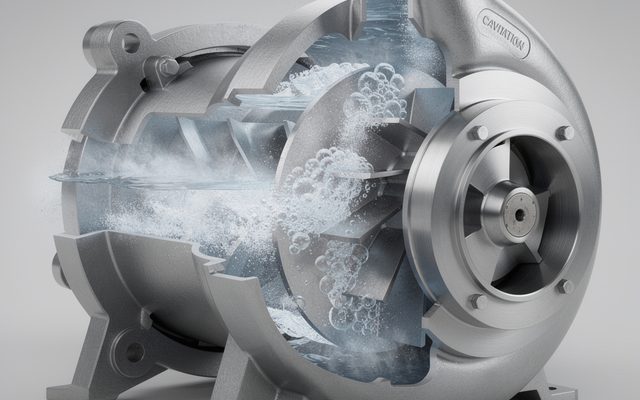
Pump Cavitation in Industrial Equipment: Causes and Fixes
A practical look at why industrial pumps cavitate, how to spot it early, and what changes actually stop the damage.
-

Total Cost of Ownership: What Industrial Equipment Really Costs
A practical look at the real costs behind industrial equipment purchases, from maintenance to resale value.