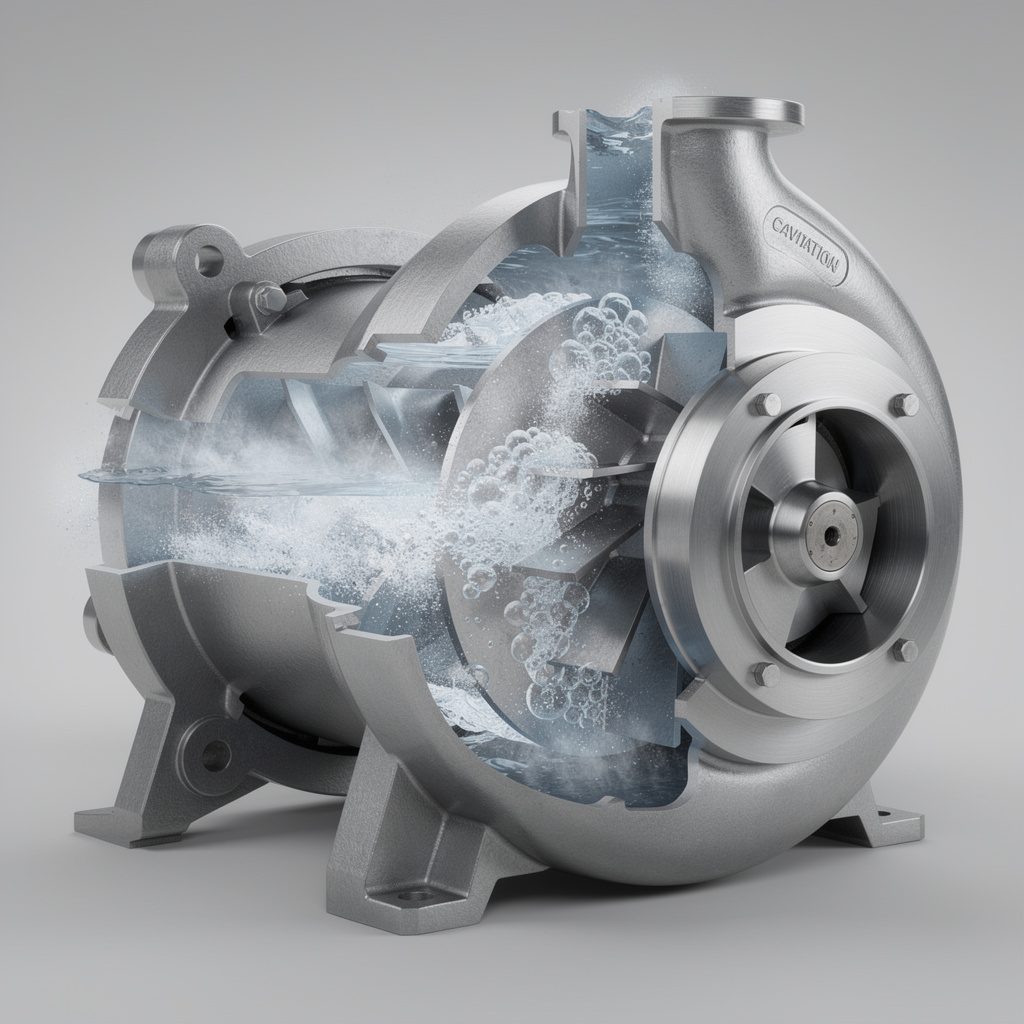
Why Industrial Pumps Fail From Cavitation—and How to Stop It
A practical look at why industrial pumps cavitate, how to spot it early, and what changes actually stop the damage.
A pump that sounds like it's pumping gravel usually isn't broken yet—it's cavitating. That grinding noise comes from vapor bubbles collapsing against metal surfaces thousands of times a second, and if it continues unchecked, it will pit the impeller, chew through seals, and shorten bearing life within weeks.
What Actually Causes It
Cavitation happens when the pressure at the pump's suction side drops below the vapor pressure of the liquid being moved. The liquid flashes into vapor bubbles, then collapses violently once it reaches the higher-pressure zone near the impeller.
The usual triggers are simple: a suction line that's too long or too narrow, a strainer clogged with debris, a suction lift that's higher than the pump was designed for, or liquid temperature creeping up during operation. Hot water systems are especially prone to this, since vapor pressure rises fast with temperature.
Another common cause is running a pump far off its design point—throttling a discharge valve too tightly, or trying to squeeze more flow out of a pump than its curve allows. Both push the pump into a suction condition it wasn't built to handle.
Signs You're Dealing With Cavitation
The sound is the first giveaway: a rattling or crackling noise, sometimes described as pumping gravel or marbles. It's not subtle once you know what to listen for.
Other signs show up on the gauges. Discharge pressure fluctuates even though the system hasn't changed, flow drops without an obvious reason, and vibration readings climb steadily over a few days rather than spiking once.
If you pull the pump apart later and find pitted, sponge-like erosion on the impeller vanes—usually on the low-pressure side—that confirms cavitation was the cause, even if the noise stopped by the time someone inspected it.
Preventing It Before It Starts
The fix almost always traces back to Net Positive Suction Head (NPSH). Every pump has a required NPSH value from the manufacturer, and the system needs to deliver more than that—commonly with a margin of a few feet of head—to stay safe under normal wear and changing conditions.
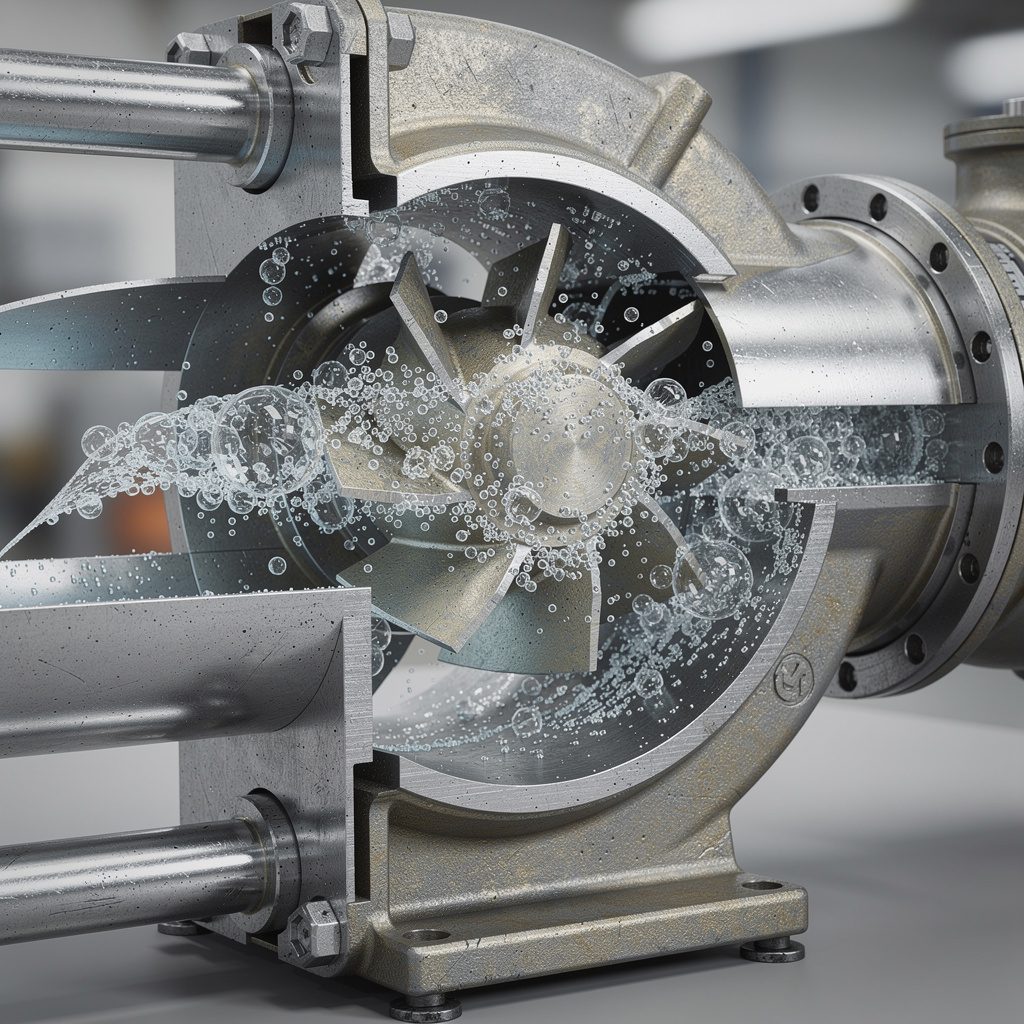
Practical steps that raise available NPSH:
- Shorten the suction pipe run or increase its diameter to cut friction losses.
- Lower the pump relative to the liquid source, or raise the source tank, to increase static head.
- Clean or replace clogged suction strainers on a fixed schedule instead of waiting for symptoms.
- Keep liquid temperature within the range the system was designed for, especially on hot process lines.
- Avoid running the pump far to the right of its curve; if more flow is needed, check whether a larger pump is the real answer.
None of these require exotic parts. Most cavitation problems get solved with pipe routing, tank elevation, or basic maintenance discipline rather than new equipment.
Fixing It Once Damage Has Started
If cavitation has already been running for a while, the impeller is the first thing to inspect. Pitted or eroded vanes reduce efficiency even after the root cause is fixed, so a damaged impeller usually needs replacing rather than smoothing over.
Seals and bearings take collateral damage from the vibration cavitation causes, even if they show no direct erosion. It's worth checking seal faces and bearing clearances during the same shutdown, since replacing them separately later means a second unplanned outage.
After repairs, verify the fix with a suction pressure gauge under real operating conditions—not just at startup, but after the system has run long enough for temperature and flow to settle. A pump that looks fine on a cold start can still cavitate once the process reaches steady state.
Why It's Worth Fixing Early
A cavitating pump rarely fails all at once. It erodes quietly, and by the time flow drops enough to notice on a control panel, the impeller may already need replacement rather than repair.
Catching the noise or the vibration trend early usually means a scheduled fix—a strainer cleaning, a pipe reroute, a valve adjustment. Catching it late means an unplanned pump swap, a production stop, and a bill that includes parts, labor, and downtime all at once.